Sermon delivered by Camille N. Isaacs Morell on Sunday, 1 March 2026 at St. George’s Anglican Church, Chateauguay, Québec.


Beloved in Christ, Shalom! I come to you today in the name of God our Creator, in the name of Jesus Christ our Redeemer and in the name of the Holy Spirit, who inspires me to speak this morning.
As St. George’s commemorates Black Heritage Month, I want to share my thoughts on the Bible readings and their relevance to our common heritage of Christian faith and love.
GENESIS 12:1-4A; ROMANS 4:1-5, 13-17; & JOHN 3:1-17
In the Old Testament reading from Genesis, Abram’s faith in God led him to obey God’s command to go to a foreign land and receive God’s promise to become the father of many nations.
In his epistle to the Romans, Paul declares that Abraham’s obedient faith led to the fulfillment of God’s promise. God counted Abraham’s faith as righteousness. Righteousness is defined as the right, love-based relationship that we have with God and with people. Today, one-third of the world’s population professes Christianity and therefore shares the common spiritual heritage of faith and righteousness that unites us as the spiritual descendants of Abraham and as members of the Kingdom of God.
In the Gospel reading, Jesus makes clear to Nicodemus that entry into the Kingdom of God is not based on how well we comply with religious laws. Entry to the Kingdom of God requires a spiritual rebirth and a public declaration of our faith, through the water of baptism.
While laws are essential for social order and justice, Jesus consistently challenged religious Jews to rise above mere compliance with law through actions motivated by love. Jesus’ teachings highlight love as a guiding principle that we should prioritize over strict adherence to legalistic rules and religious laws.
Simply put, in His teachings, Jesus defines love as a conscious choice to pursue the common good for our neighbours and for ourselves.
These teachings are especially relevant during Black Heritage Month, as we reflect on how love, rather than law alone, can bring about true unity, justice, and reconciliation within our communities.
During Black Heritage Month, while we celebrate the accomplishments and contributions of Black Canadians, we reflect on the struggle for civil rights and the establishment of anti-discriminatory laws.
Black Canadians have played a pivotal role in advancing laws that benefit all Canadians.
Racism remains in Canada, showing a gap between legal intentions and the realities faced by visible minorities. The law can’t mandate love. Therefore, some people and some institutions meet only basic requirements. For instance, organizations may hire visible minorities to appear diverse, but often undervalue their contributions with lower wages and limited involvement in decision-making.
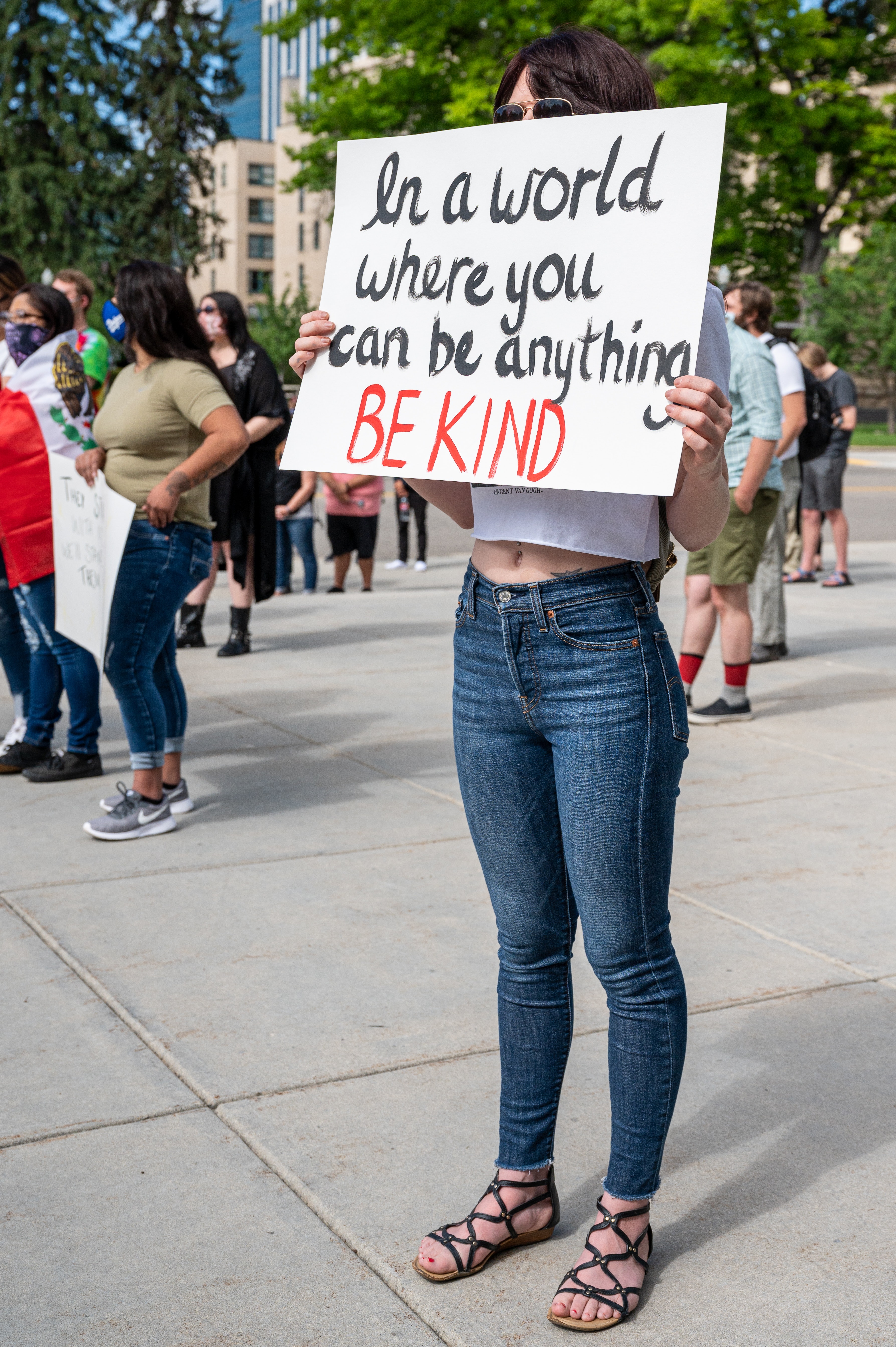
Black Heritage Month is an opportunity to discern how we can build a society where love, that is, our acts of kindness, our consideration of the highest good of others, goes above and beyond the minimum standards of anti-discriminatory laws. As Christians, love is our identity. Jesus said, “By this everyone will know that you are my disciples, if you have love for one another” (John 3:35).

The question I encourage us all to consider today is –
How do we let love guide our actions beyond the minimum standards of the law?
We do this through our individual and collective transformation into the image and likeness of God, who, in Jesus Christ, is love personified.
In keeping with Jesus’ teaching to Nicodemus, that transformation not only involves being born again through the confession of faith in our baptismal vows, but the transformation also requires a lifelong journey of growth through listening, learning, and acting in love, so that we become more and more like Jesus.
Throughout Black Heritage Month, multicultural activities encourage us to connect with others through food, festivals, and fellowship. These events foster understanding and respect but can also create the illusion that racism has vanished or that we are not involved in racism.
Although significant progress has been made in race relations, there is still a lot of work to be done. I would like to highlight 3 common errors that are stumbling blocks to progress.
- Claiming “I don’t see colour.” Most of us have said this at some time or other.
This statement, though well-intentioned, is patronizing as it comes across as a concerted effort to say that one person has risen in status to being “one of us,” and that “us” is usually a person of another group. Furthermore, the statement denies the richness of diversity.
- Saying that we are all equal, while being insensitive to the realities of visible minorities.
Fears of racial profiling in shopping malls, micro-aggressions in the form of insensitive comments in social settings, and potentially tense interactions with law enforcement are daily realities faced by visible minorities, like me. Many White Canadians may not witness these challenging situations and have no understanding that these situations exist, which leads to the erroneous perception that everyone is treated equally under the law.
- A third obstacle to racial harmony is focusing so much on racism that every situation is seen only through a racial perspective. There are several angles from which this stumbling block can be viewed. However, I will focus on one aspect that the Holy Spirit has laid on my heart to speak about.
Black people should be aware that being overly preoccupied with racism can blindside us to racism that Black people perpetuate against White people. I say this because I’ve seen and heard Black people make egregious, hateful, racist statements against White people. This is reverse racism, and I am calling it out. I am also calling out colourism, where Black people disparage other Black people with lighter- or darker-toned complexions. It is wrong. Reverse racism and colourism create a hateful, vicious cycle that derails the progress that has been made and stymies our efforts to rise above the minimum standards of the law. I urge my Black brothers and sisters here to confront Black racists and colourists wherever and whenever you meet them. Reverse racism and colourism must be put to death and be put to death decisively. There is no justification or place for any of this. This is 2026. We are now in the business of eliminating racism and discrimination in all its forms.
Being aware of all these stumbling blocks, we must ask ourselves what we can do to surmount them by putting our Christian faith into action.
1. Foster multi-ethnic collaboration to prevent the formation of ethnic enclave congregations and special interest groups that operate on the margins of the Church.
Admittedly, there will always be occasions for groups to gather by shared identity – ethnic, cultural and linguistic minority groups, men’s and women’s fellowship, etc. However, members of these groups should be heard, feel safe, and be embraced at the heart of a diverse and flourishing Church, not on its margins.
On that note, I would like to highlight the work that is currently being undertaken in the Diocese of Montreal. Your priest, Rev. Deborah Noonan, was instrumental in setting up a task force in the Diocese of Montreal to engage in anti-racism work. The 161st Synod of the Diocese of Montreal adopted a motion to implement the Anti-Black Racism Action Plan developed by a multi-ethnic group of concerned clergy and laypersons. The Action Plan requires clergy and laypersons, of all ethnicities, to work together to create a new vision of a truly united, multi-ethnic, multi-cultural Church whose prevailing identity is love.
2. Create safe spaces for bridge-building, where the status quo can be questioned and challenged.
This requires courage and commitment. Bible studies and book studies should help us confront difficult truths, leading us to acknowledge and release ourselves from stereotypes and self-deception. We must have the courage to ask ourselves some tough questions about the possible ways we and the institutions to which we belong may be contributing to systemic racism.
• Are we prepared to examine historical precedent and current practices in organizations to which we belong?
• How do we engage during conversations about race? Are we listening and engaging in dialogue with facts, informed opinions and with empathy?
• How can we use our positions of leadership, influence, and privilege to make things better?
3. As people of faith, let’s commit to being advocates and agents of change.
Some ways to do this – create and sign petitions; attend and participate in public hearings and debates; write letters to political representatives; publish articles and opinion pieces on various communication platforms; challenge organizations in which you belong to be more inclusive in their membership.
As I conclude, I encourage all of us to truly embrace our shared Christian heritage of faith, righteousness, and love. I encourage all of us to reflect on the paths we will forge during and beyond Lent as a people committed to following the way of Jesus, whose death is the greatest act of love ever committed for all humanity.
As we kneel at the altar to partake in Holy Communion today, let us remember that it doesn’t matter one bit that there are differences in our racial or cultural identities in this place of worship. We are affirming our common identity as God’s people – a people who have fully embraced the way of faith as did our father Abraham; a people who are born of the Spirit and committed to our baptismal vows; who, like the resurrected Jesus, are committed to intentionally loving our neighbours as ourselves; a people committed to ensuring justice for all.
We come to the Lord’s Table as equals, loved unconditionally by God, united in faith and committed to love. Thank you, and may God bless you all!
Christ in you, the hope of glory. That’s why glory matters.

 Glory Matters