
As I read the account of the Syrophoenician woman’s plea for Jesus to heal her daughter, I was led to ask myself some hard questions about the meaning of the sacrament of Holy Communion.
Jesus’ Ministry and Prejudice
Jesus’ ministry was marked by His preaching to pious, religious, Jewish people, who, by Biblical accounts, held many prejudiced beliefs about Gentiles. In this passage, Jesus honoured the faith of the Syrophoenician woman as she begged Him to cast a demon out of her daughter. By referring to dogs and crumbs, I believe that Jesus was speaking in terms to which the Jews could relate. His play on words was a real challenge to the Jewish disciples who were listening to his conversation with the Syrophoenician woman.
Addressing Prejudice and Self-Righteousness
This raises the question: Was Jesus indirectly addressing the deep-seated prejudices and self-righteous piety that may have been in the hearts of his disciples? I believe that He was. I am convinced that Jesus was fully aware of the woman’s faith and was prepared to redeem her daughter from the grip of the devil.
The Message of Inclusion
But Jesus’ message was clear:
Salvation is not reserved for a few. We cannot come to His table believing that ‘others’ are excluded.
Personal Experience with Communion
A few years ago, having Holy Communion in prison with inmates was a particularly meaningful experience for me. I really understood that all of us are stretching out our hands asking for mercy and receiving God’s grace when we receive the bread. We all share in the redemptive love of God when we drink from the cup. Regardless of our sins—be it murder, theft, or holding a secret grudge—we come together asking for and receiving God’s unconditional grace, which is our shared heritage as Children of God.
The Syrophoenician Woman
24 Jesus got up and left there and went to the region of Tyre [and Sidon, the coastal area of Phoenicia]. He entered a house and did not want anyone to know about it; but it was impossible for Him to be hidden [from the public]. 25 Instead, after hearing about Him, a woman whose little daughter had an unclean spirit immediately came and fell at His feet. 26 Now the woman was a Gentile (Greek), a [g]Syrophoenician by nationality. And she kept pleading with Him to drive the demon out of her daughter. 27 He was saying to her, “First let the children [of Israel] be fed, for it is not right to take the children’s bread and throw it to the [h]pet dogs (non-Jews).” 28 But she replied, “Yes, Lord, but even the pet dogs under the table eat the children’s crumbs.” 29 And He said to her, “Because of this answer [reflecting your humility and faith], go [knowing that your request is granted]; the demon has left your daughter [permanently].” 30 And returning to her home, she found the child lying on the couch [relaxed and resting], the demon having gone.
Mark 7: 24-30 AMP
Food for Thought
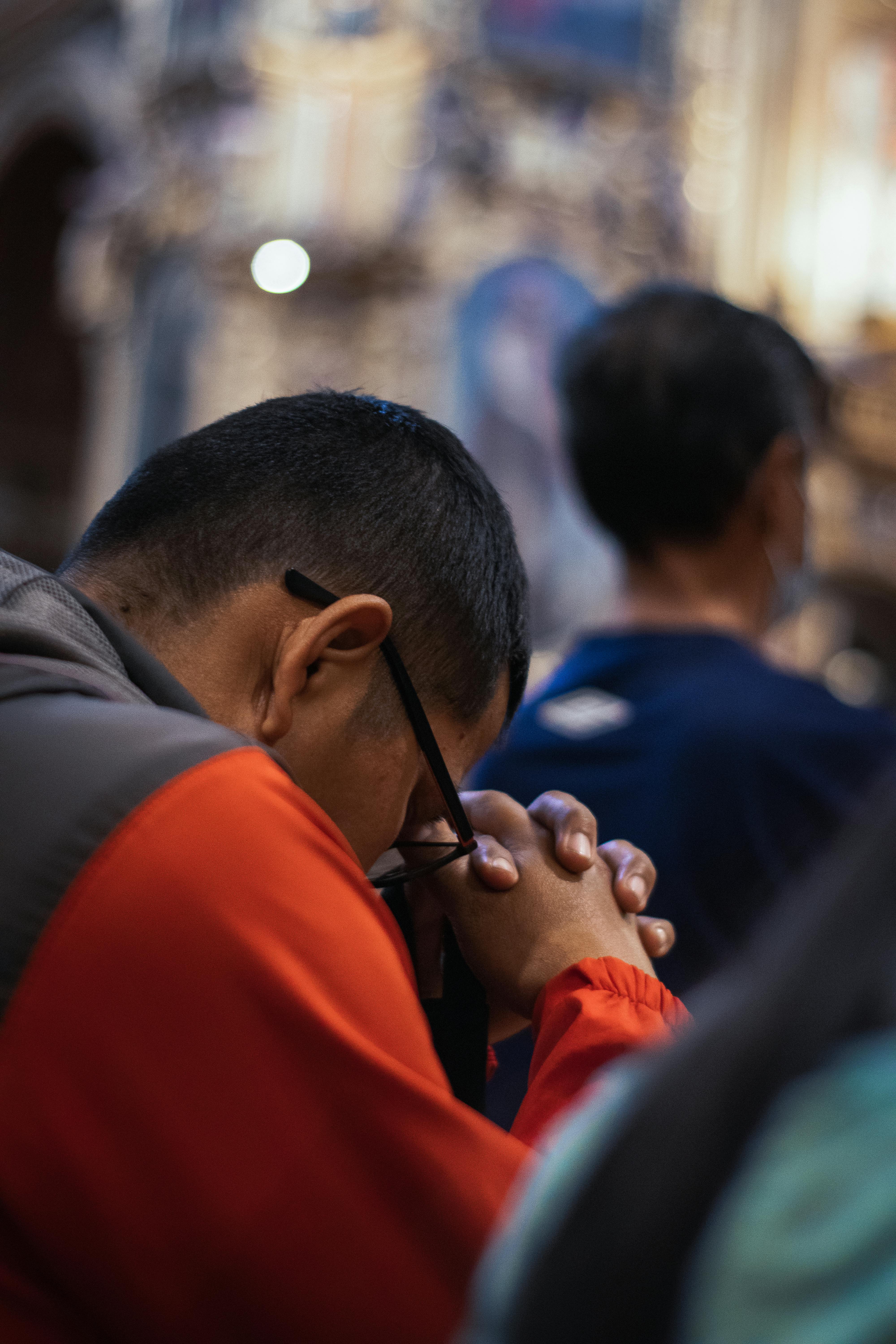
When I am kneeling with my hands outstretched and receiving communion at the altar, am I not like this woman begging for mercy and grace? Am I not like the beggar on the street corner? Am I not like the displaced and homeless in the rubble in Gaza? Am I not like the inmates in prison, who asked to have communion served to them?

 Glory Matters